Tag Archives: book review

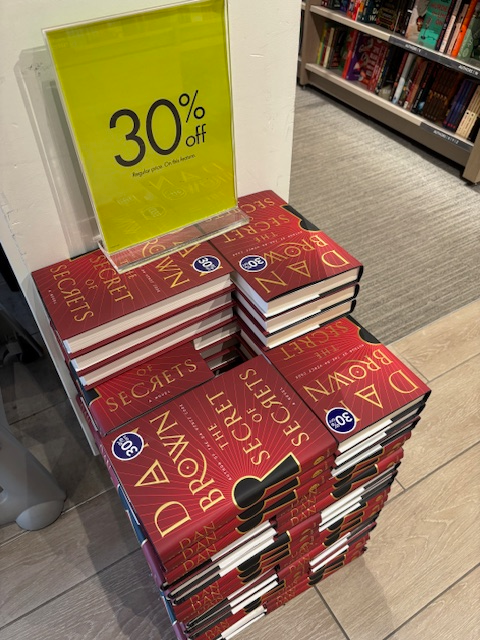
What the Book! The Secret of Secrets by Dan Brown

What the Book! The Secret of Secrets by Dan Brown

I bought this book because I wanted a page-turner, and I wasn’t disappointed. Although, there are a lot of pages to turn, six hundred and seventy-one to be exact; that’s one hundred and thirty-nine chapters of spare, economic prose. Each chapter is designed to advance the plot. And what a plot it is; intricate, convoluted perhaps, a bit unbelievable perhaps but Dan Brown doesn’t really give the reader the chance to let these impressions sink in, he keeps it moving and that’s what writing best sellers is all about, I guess.

The novel is set in modern times in the city of Prague. The city, with its history and architecture, quickly becomes one of the main characters which is a good thing because there are only two other Czech characters in the novel – two cops who border on Keystone in their ineptitude. The rest of the characters, good and bad, are mostly American. On the side of good, are Robert Langdon, a professor of symbology and Katherine Solomon a professor of noetic science. On the side of evil, tempered by the need to protect the US of A, is the CIA.

Robert and Katherine are in a romantic relationship. In fact, as the first chapter begins, they are waking up in Robert’s hotel room bed after a night of well….sex is alluded to but not described. It’s all very PG, almost prim, this is Dan Brown not John Updike. Although at one point in the book there’s a discussion about the science of the orgasm. You’re a wild one, Dan.

But talking of science, writing about science is one of Dan Brown’s strengths and how he incorporates it into the plot, when discussing human consciousness, is what makes this novel worth reading. The underlying theme in the book is that regular physics cannot explain how the human brain functions, that the human brain could not possibly store all the data we accumulate through our life spans. Instead, all these memories, emotions, knowledge, stories are stored in a universal consciousness and when we die all those memories etc. live on in that universal consciousness not unlike the way some religions describe the soul leaving the body at the moment of death. Dan Brown explains this and a number of other concepts far better than I have and weaves them effortlessly into the plot.

So buy the book, turn those pages, you’ll learn something and you’ll end up wanting to take a trip to Prague!
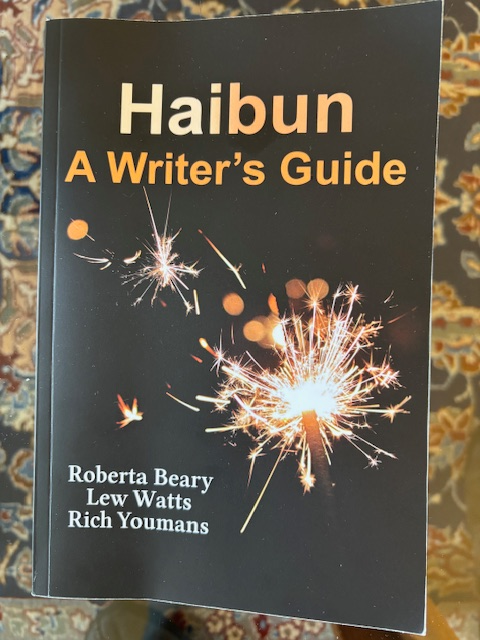
What the Book! Haibun A Writer’s Guide

In Rattle Magazine Issue 87, Lew Watts, the Welsh Poet, was interviewed by the editor, Timothy Green. It is a fascinating, wide-ranging and entertaining interview about all things ‘haibun’ and during the interview, this book was mentioned.


A confession. I’ve been mispronouncing ‘haibun’ for some time. Even now when I see the word on paper, ‘halibun’ pops into my head. I even cracked jokes involving ‘halibun and chips’. But back to the book.


This book is essential reading for anyone interesting in reading and writing haibun. It is accessible, entertaining and breaks down the essential ingredients that go into a haibun. That is no mean feat, because, like the haiku there is an ineffable quality to the haibun.

arcane moon
po-faced
fades to morning

Okay, pump the brakes. A good haiku makes or breaks the haibun. The other ingredients…title, and prose complete the trinity. What this book does well, through several fascinating examples, is explain how these three ingredients spark off each other and cause the reader to revisit the haibun again and again.

So go out and buy this book, you won’t regret it!

Pocket Review – Snow by John Banville

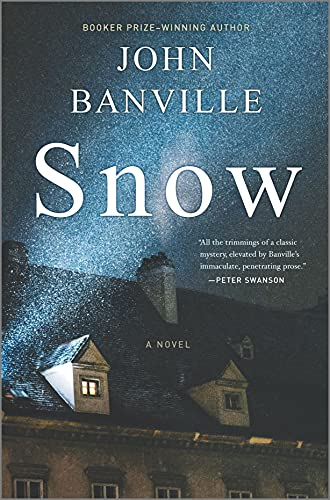
Snow by John Banville.

This book, on the surface, is a standard murder- in –the- big- house whodunit but underneath it’s a commentary on the state of the nation, the Irish Nation in 1957. Ireland (the 26 counties at least), has been free of British rule since 1921 and the Catholic majority now rule the roost.  The sleuth, Detective Inspector St. John Strafford,   is a the son of protestant landed gentry, burdened by the curses of his class – good manners, left handedness and hemophilia.  He’s an outsider now that the caste system has been turned on its head and Banville, like the good writer he is, shows this in a variety of subtle and amusing ways.

Archbishop Mc Quaid, the archbishop of Dublin, is one of the characters in the book and his long and sanctimonious arm reaches into every aspect of Irish society. He serves as a reminder that the Irish traded one oppressor, the English, for another more subtle oppressor, the Catholic Church. There is a chilling chapter about abuse in Irish residential industrial schools which brings to mind what happened to indigenous children in Canadian residential schools.

On top of all that there’s a dead priest, an intricate plot and sex scenes you will not find in Agatha Christie.

Verdict:

Read it, recommend it to a friend!

Runcible

Runcible

The other day
I came across the word ‘runcible’
as in ‘runcible spoon’.

The word was invented by Edward Lear
as in ‘The Owl and the Pussycat’.

There is something risible about the word ‘runcible’
as in ‘laughter provoking’
which is different than ‘laughable’,
‘laughable’ has connotations of contempt
as in ‘derisible’ meaning ‘worthy of derision’,
‘derisible’ is almost an anagram of ‘desirable’
but back to ‘runcible’,
there is a great bounce, a great versatility to the word:

he walked out the morning after
humming a runcible tune

he had a runcible air about him
an odour that lingered
long after he had left the room.

the sun rose, red and runcible
in a diffident sky

I once spent the best part of six hour plane journey trying to describe the sunrise. There was no inflight entertainment, I could have used the downloadable app but I couldn’t imagine watching out of date Jason Bateman movies for 6 hours on my phone, so I had picked up a Craig Johnson novel, The Cold Dish, to get me through the flight.
This is the first novel in the Walt Longmire series. Walt is a sheriff in modern day Absaroka County, Wyoming. His wife has been dead 4 years and his life is a bit of a mess but there are various people looking out for him including his best friend, Henry Standing Bear. I know what you are thinking – an American law man with a Native American sidekick!! Anyway Craig Johnson navigates this well enough. There are a number of women in Walt’s life, including his daughter Cady, his dispatcher Ruby, a café owner Dorothy, Vic –his deputy, and Vonnie – a romantic interest. Vonnie is rich, beautiful, and troubled. They are all strong women and they don’t take no shit from Walt.
Walt is at Henry’s bar talking to Vonnie when he gets a call from Vic that a body has been found in a gulley up in the mountains. Walt heads to the scene, the body is hard to get at and the crime scene is complicated by the fact that a herd of sheep has surrounded the body, shat upon it and chewed at the clothes. The body turns out to be Cody Pritchard, a local boy who was involved in the rape of a girl from the reservation and got off lightly. It’s early morning by the time the crime scene has been secured and there is this moment after a long night where Walt, the narrator, says : “I gazed back up to the patch of sage and scrub weed and watched the sun free itself from the red hills”.
This is what amazes me about novelists, they have to handle character, plot, dialogue and create a world for characters to inhabit, for events to occur and they still find time to come up with lines like I have just quoted. So that was it for me, I spent the rest of the flight trying to come up with different ways to describe the sunrise.

As for the book, it’s well worth a read. Craig Johnson creates believable characters, characters to care about, to root for and the whole thing meanders along laconically with lots of witty banter and joshing – the kind of  joshing you would find in a small town cafe at 10  in the morning, one of those cafes with gingham tables and a robust waitress with chemically damaged hair who won’t take any shit from the bunch of plaid shirted retired guys who turn up every morning to shoot the breeze.

the sun rose, red and runcible
in a diffident sky
.

Taking part in Open Link Weekend over at earthweal

Sgt. Pepper Mashup (Art, pop and found poetry)

IMG_0384


Sgt. Pepper Mashup (a found poem)

Made passively tolerant by LSD, he was happy to sit back
endlessly recombining like some insoluble chemical compound
all he really wanted was the cyclic cloud drift of his verse.

The song never relinquishes this staccato dominant
played by Harrison on his Stratocaster with treble-heavy settings
making the most of McCartney’s rich ninth’s and elevenths –
a brilliantly whimsical expression of period burlesque.

It is impossible to conduct a revolution without picking a side
like a comic brass fob watch suspended from a floral waistcoat
objectivity is illusory and all creativity inescapably self –referential.

The track is whipped to a climax by a coruscating pseudo-Indian guitar solo.
Lennon grinned sardonically, as he walked past Aspinall,
requesting from Martin a sound like the end of the world.


I have always felt that found poetry is a form of theft. Yet, here I am with my first found poem. It all started with listening to the remastered copy of Sgt.Pepper, ( a vast improvement on the snap, crackle and pop of my old vinyl version) and in particular, the guitar solo in “Fixing a Hole”. Paul McCartney played lead guitar on a number of tracks on the album, but the style of playing on the solo sounded more like George Harrison. So, I consulted the bible – “Revolution in the Head”, by Ian MacDonald, a track by track analysis of 241 Beatle tracks and essential to any Beatles nerd. Yes, it is George’s solo!
I read a couple of other track analyses and found myself enjoying MacDonald’s writing style, a number of phrases jumped out from the page and the idea of a found poem formed. The result is the above poem. It has, believe it or not, a structure: each line is a direct quote from an analysis of an individual Sgt. Pepper track, and the lines are sequenced in the same order as the tracks appear on the album.
Buy Ian MacDonald’s book, you won’t be disappointed and I will feel better about stealing his stuff.

The subject over at dVerse is Pop Art, I can’t think of anything more pop art than Sgt. Pepper from the cover to the content (the Beatles turned pop into an art form) plus found poetry is a form of collage, so I thought I would link this one!


Found Poetry – Theft or Tribute?(Sgt. Pepper Mashup )

IMG_0384


Sgt. Pepper Mashup 

Made passively tolerant by LSD, he was happy to sit back
endlessly recombining like some insoluble chemical compound
all he really wanted was the cyclic cloud drift of his verse.

The song never relinquishes this staccato dominant
played by Harrison on his Stratocaster with treble-heavy settings
making the most of McCartney’s rich ninth’s and elevenths –
a brilliantly whimsical expression of period burlesque.

It is impossible to conduct a revolution without picking a side
like a comic brass fob watch suspended from a floral waistcoat
objectivity is illusory and all creativity inescapably self –referential.

The track is whipped to a climax by a coruscating pseudo-Indian guitar solo.
Lennon grinned sardonically, as he walked past Aspinall,
requesting from Martin a sound like the end of the world.


I have always felt that found poetry is a form of theft. Yet, here I am with my first found poem. It all started with listening to the remastered copy of Sgt.Pepper, (issued last year, and a vast improvement on the snap, crackle and pop of my old vinyl version) and in particular, the guitar solo in “Fixing a Hole”. Paul McCartney played lead guitar on a number of tracks on the album, but the style of playing on the solo sounded more like George Harrison. So, I consulted the bible – “Revolution in the Head”, by Ian MacDonald, a track by track analysis of 241 Beatle tracks and essential to any Beatles nerd. The solo was Harrison’s.
I read a couple of other track analyses and found myself enjoying MacDonald’s writing style, a number of phrases jumped out from the page and the idea of a found poem formed. The result is the above poem. It has, believe it or not, a structure: each line is a direct quote from an analysis of an individual Sgt. Pepper track, and the lines are sequenced in the same order as the tracks appear on the album.
Buy Ian MacDonald’s book, you won’t be disappointed and I will feel better about stealing his stuff.


Found Poetry – Theft or Tribute?(Sgt. Pepper Mashup )

IMG_0384


Sgt. Pepper Mashup 

Made passively tolerant by LSD, he was happy to sit back
endlessly recombining like some insoluble chemical compound
all he really wanted was the cyclic cloud drift of his verse.

The song never relinquishes this staccato dominant
played by Harrison on his Stratocaster with treble-heavy settings
making the most of McCartney’s rich ninth’s and elevenths –
a brilliantly whimsical expression of period burlesque.

It is impossible to conduct a revolution without picking a side
like a comic brass fob watch suspended from a floral waistcoat
objectivity is illusory and all creativity inescapably self –referential.

The track is whipped to a climax by a coruscating pseudo-Indian guitar solo.
Lennon grinned sardonically, as he walked past Aspinall,
requesting from Martin a sound like the end of the world.


I have always felt that found poetry is a form of theft. Yet, here I am with my first found poem. It all started with listening to the remastered copy of Sgt.Pepper, (issued last year, and a vast improvement on the snap, crackle and pop of my old vinyl version) and in particular, the guitar solo in “Fixing a Hole”. Paul McCartney played lead guitar on a number of tracks on the album, but the style of playing on the solo sounded more like George Harrison. So, I consulted the bible – “Revolution in the Head”, by Ian MacDonald, a track by track analysis of 241 Beatle tracks and essential to any Beatles nerd. The solo was Harrison’s.
I read a couple of other track analyses and found myself enjoying MacDonald’s writing style, a number of phrases jumped out from the page and the idea of a found poem formed. The result is the above poem. It has, believe it or not, a structure: each line is a direct quote from an analysis of an individual Sgt. Pepper track, and the lines are sequenced in the same order as the tracks appear on the album.
Buy Ian MacDonald’s book, you won’t be disappointed and I will feel better about stealing his stuff.